Quick Answer
Okay, so here's the quick version. You've been ignoring that big tree in your yard, and now it's looking a little sketchy. The bottom line is that neglected trees are accidents waiting to happen. Most of the time, the fix is getting a pro out for a good trim, which might run you $200 to $700. But if you've let it go too long and the tree's gotta come down, you could be looking at thousands. Don't be the guy who tries to save a few bucks and ends up with a branch through his roof.
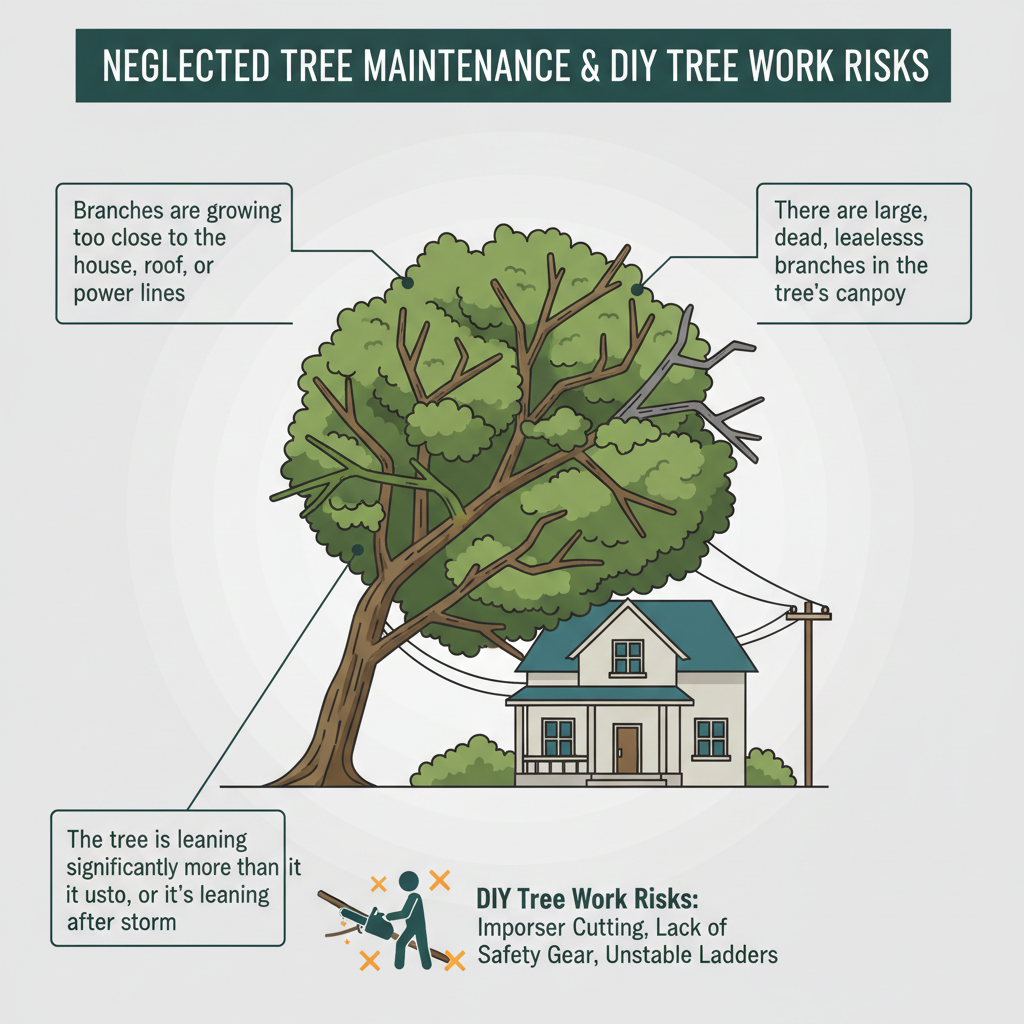
Common Symptoms
Possible Causes
Step-by-Step Diagnosis
Step 1
Stand far back from the tree (50+ feet) to assess its overall lean and balance.
Step 2
Inspect the base of the trunk for fungus, deep cracks, or roots girdling the trunk.
Step 3
Examine the main trunk and branches for cavities, peeling bark, and signs of decay.
Step 4
Look up into the canopy for dead, broken, or rubbing branches.
Step 5
Check for signs of insect infestation, like rows of holes or sawdust-like frass.
Step 6
Assess the tree's stability, especially after heavy rain or high winds, by checking for any new shifting of the soil around the roots.

DIY vs Professional Costs
| Repair Type | DIY Cost | Professional Cost | Time Required |
|---|---|---|---|
Small branch pruning (from ground) | $50-100 | $200-700 (as part of a full trim) | Under 1 hour |
Professional Tree Trimming/Pruning | N/A - Not recommended | $200-700+ | 2-4 hours |
Standard Tree Removal (Medium) | N/A - Not recommended | $400-1500 | 3-6 hours |
Hazardous or Emergency Tree Removal | N/A - Not recommended | $1500-6000+ | 4-8+ hours |
When to Call a Professional Tree Service
- Anytime you would need to use a ladder to reach the branches you want to cut.
- When branches are within 10 feet of power lines or are touching your roof or house.
- When a tree is visibly dead, diseased, has large cavities, or is leaning unsafely.
- For any and all tree removals, especially large trees or trees in tight spaces.
- After a storm has caused significant damage like split trunks or large broken limbs.
- If using a chainsaw is required to complete the job.
- When you need to diagnose a potential tree disease or serious pest infestation.
Prevention Tips
- Have a certified arborist inspect your trees every 3-5 years to catch problems early.
- When planting new trees, consider their mature size to avoid future conflicts with structures or power lines.
- Prune trees when they are young to establish a strong, stable structure for the future.
- Address small issues like broken branches or minor pest problems quickly before they become big, expensive ones.
- Don't ignore storm damage; have any newly cracked or broken limbs assessed by a professional right away.
Frequently Asked Questions
Related Guides
Tree Removal vs. DIY Tree Cutting (Troubleshooting & Fixes)
Thinking about cutting down that tree yourself? As a guy who's seen it all go wrong, here's my honest take on when to DIY and when to call a pro.
Deciding between DIY tree care/removal and hiring professional tree services, considering costs, risks, and benefits. Troubleshooting & Fixes
Deciding on DIY Tree Work vs. Hiring a Pro (My Two Cents)
A veteran tech's brutally honest guide on DIY tree trimming vs. calling a pro. Learn when to save a buck and when you're risking your life and your house.
DIY Tree Work vs The Pros: When to Call for Backup (A Reality Check)
Thinking of DIY tree work? A 25-year vet explains the risks. Learn when to tackle it yourself and when calling a pro is the only smart move.
Neglecting Tree Maintenance vs. Professional Tree Services Troubleshooting & Fixes
Unexplained tree decline, leading to visible signs of distress or death in trees without an obvious cause. Troubleshooting & Fixes
Is your tree just not looking right? A veteran arborist explains how to diagnose vague symptoms like leaf yellowing or thinning canopy and when to call for help.
Need Professional Help?
Find top-rated tree service experts in your area